



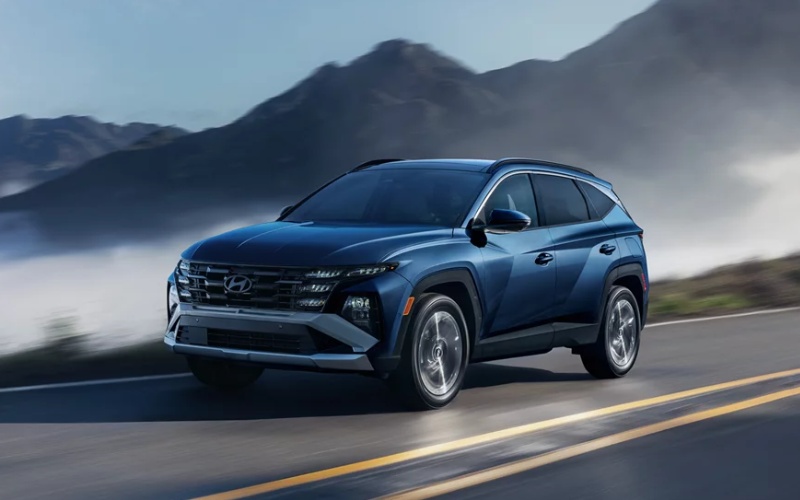
Dorsett Hyundai – Is the 2026 Hyundai TUCSON a better choice over the 2026 Kia Sportage for daily driving near Indianapolis, IN?
Shoppers often ask a simple question that unlocks the whole decision: which compact SUV better fits daily life—TUCSON or Sportage? Both deliver sharp design, modern cabins, and advanced driver-assist tech, but the details reveal why many commuters and families lean toward TUCSON. For 2026, Hyundai kept its successful formula while adding a few meaningful advantages. The 2.5-liter ICE configuration now tows up to 2,750 pounds with trailer brakes, providing confidence for a lightweight camper or small utility trailer. XRT gains Terrain Mode with Mud, Snow, and Sand settings, which broadens capability for gravel drives, shoulder pull-offs, and unpaved trailheads. And for electrified buyers, the included Level 1/Level 2 combo charging cable reduces setup friction at home or on the go. Sportage counters with available Dual Panoramic Displays and rugged X-Line/X-Pro styling, but owners seeking calm road manners and less intrusive driver-assist behavior often prefer TUCSON’s tuning.
Inside, both SUVs offer airy cabins and wireless Apple CarPlay® and Android Auto™. TUCSON’s interface balances a clean, modern aesthetic with just enough physical controls for climate, so routine adjustments do not pull attention away from the road. The thoughtful layout continues with a column-mounted shifter that frees up the console, deep storage bins, and rear-seat geometry that makes three-across more realistic when carpooling. Sportage answers with an updated dashboard and available color themes, plus features like available 360° Surround View Monitor and Blind-Spot View Monitor—capabilities mirrored in TUCSON’s lineup. When people cross-shop, test drives tend to tip the scale. TUCSON’s combination of low cabin noise, settled body control, and linear brake and steering feel makes commutes less tiring and long trips more relaxing. That intangible calm becomes a tangible benefit when rush-hour traffic is part of daily life.
Safety technology is robust across both nameplates. TUCSON offers Forward Collision-Avoidance Assist, Lane Keeping Assist, and available Highway Driving Assist for lane-centering support on compatible roads. Sportage provides similar capability, including standard Auto Emergency Braking with Junction Turning Detection and available Highway Driving Assist. The difference is how these systems present themselves: TUCSON’s driver aids feel measured and predictable, which builds trust quickly for drivers of varying experience levels. Owners also appreciate Hyundai’s complimentary scheduled maintenance for three years or 36,000 miles—service intervals that help keep software and safety systems current without added complexity.
Electrified shoppers will find compelling HEV and PHEV variants on both sides. TUCSON’s smooth low-speed calibration, clear energy-flow displays, and that included Level 2 combo charging cable add up to fewer ownership hurdles. For many buyers, reducing friction—whether in charging gear, driver-assist setup, or daily controls—turns a good SUV into the right SUV. When comparing TUCSON and Sportage, that theme shows up over and over.
Ultimately, the “better for me” answer depends on how and where you drive. If quiet refinement, straightforward tech, and flexible capability matter most, TUCSON sets the pace for compact SUVs in a way that shows up every day—not just on a spec sheet. Dorsett Hyundai is serving Indianapolis, Bloomington, and Effingham with knowledgeable guidance on trims, powertrains, and feature bundles so you can tailor your new SUV to your routine with confidence.
Frequently Asked Questions:
Which SUV is more comfortable for long commutes?
TUCSON emphasizes cabin quietness, linear controls, and seats that support a wide range of body types. Those traits help reduce fatigue on daily drives and road trips, a common reason test drives swing in TUCSON’s favor.
How do their driver-assistance features compare?
Both offer comprehensive suites with lane-centering and camera-based blind-spot views. Many drivers find TUCSON’s alerts and steering support less intrusive, which builds trust quickly in mixed traffic and during lane changes.
What about towing and weekend versatility?
TUCSON’s ICE configuration is rated up to 2,750 lbs with trailer brakes, providing headroom for small campers or utility trailers. Sportage’s max rating is lower, so buyers who tow periodically often choose TUCSON for the margin of capability.
Request more 2026 Hyundai Tucson information
Connect with us


- Dorsett Hyundai Service
- Hyundai Dealer
- Hyundai Elantra
- Hyundai IONIQ 5
- Hyundai IONIQ 9
- Hyundai Kona
- Hyundai Palisade
- Hyundai Santa Cruz
- Hyundai Santa Fe
- Hyundai Santa Fe Hybrid
- Hyundai Service
- Hyundai Sonata
- Hyundai Tucson
- Hyundai Tucson Hybrid
- Hyundai Venue
- Terre Haute Hyundai Dealer
- Terre Haute Hyundai Service
Categories
DealerOn Hyundai

Address
74 East Springhill Drive
Terre Haute, IN 47802
Phone
- Sales 812-917-3631
- Service 812-917-3628
- Parts 812-917-4851
| Monday | 9:00AM - 6:00PM |
| Tuesday | 9:00AM - 6:00PM |
| Wednesday | 9:00AM - 6:00PM |
| Thursday | 9:00AM - 6:00PM |
| Friday | 9:00AM - 6:00PM |
| Saturday | 9:00AM - 5:00PM |
| Sunday | Closed |
| Monday | 8:00AM - 5:00PM |
| Tuesday | 8:00AM - 5:00PM |
| Wednesday | 8:00AM - 5:00PM |
| Thursday | 8:00AM - 5:00PM |
| Friday | 8:00AM - 5:00PM |
| Saturday | 8:00AM - 12:00PM |
| Sunday | Closed |
| Monday | 8:00AM - 5:00PM |
| Tuesday | 8:00AM - 5:00PM |
| Wednesday | 8:00AM - 5:00PM |
| Thursday | 8:00AM - 5:00PM |
| Friday | 8:00AM - 5:00PM |
| Saturday | 8:00AM - 12:00PM |
| Sunday | Closed |