



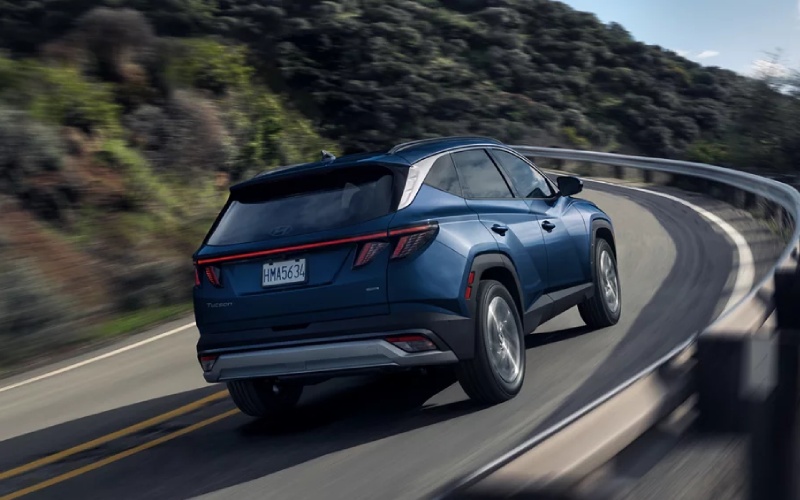
Dorsett Hyundai – Is the 2026 Hyundai TUCSON more comfortable than the 2026 Toyota RAV4 for Indianapolis, IN daily drives?
Comfort is one of the most important questions shoppers ask when comparing the Hyundai TUCSON and Toyota RAV4, and it is also one of the most personal. Some drivers focus on seat support, some care about technology placement, and others want a quiet cabin that makes commuting feel less tiring. For Indianapolis, IN drivers who spend time on I-465, I-70, local arterials, parking garages, and school or office routes, comfort is not just about soft materials. It is about how naturally an SUV fits into a full day. The TUCSON makes a strong impression because it blends cabin space, thoughtful technology, flexible cargo utility, and available convenience features into one balanced compact SUV.
The RAV4 is a strong competitor with a redesigned 2026 lineup, available hybrid and plug-in hybrid powertrains, Toyota Safety Sense™ 4.0, a standard 12.3-inch digital gauge cluster, and available 12.9-inch Toyota Audio Multimedia. Those are meaningful strengths. However, the TUCSON feels especially well suited for drivers who want a cabin that is simple to use, visually modern, and comfortable across a variety of everyday situations. Dorsett Hyundai, serving Indianapolis, Champaign, and Lafayette, recommends taking a closer look at the TUCSON if your idea of comfort includes easy smartphone integration, a relaxed seating position, helpful storage, and the confidence of Hyundai’s warranty coverage.
What makes an SUV feel comfortable every day?
Daily comfort starts before the vehicle even moves. The driver should be able to settle in quickly, find the right seating position, see important information clearly, and reach key controls without a learning curve. The TUCSON cabin is designed with that kind of everyday usability in mind. Available dual 12.3-inch displays help create a clean, high-tech layout, while wireless Apple CarPlay® and Android Auto™ compatibility supports navigation, music, calls, and messages without making the cabin feel cluttered. For many drivers, that reduces the small frustrations that can build up over a week of commuting.
The RAV4 also offers modern technology, including wireless Apple CarPlay® and Android Auto™ compatibility and its Toyota Audio Multimedia system. The difference is in the overall feel. The TUCSON leans into a more streamlined, premium-inspired layout, while the RAV4 has a bolder, more rugged design character. For shoppers who prefer a cabin that feels calm and contemporary, Hyundai’s approach may be more appealing. It is not about dismissing Toyota’s strengths; it is about matching the vehicle to the way you actually drive. If your SUV is used for commuting, errands, appointments, family logistics, and weekend plans, the TUCSON interior feels refreshingly easy to live with.
Cabin space, seating, and cargo flexibility
Comfort is also about how well a compact SUV adapts to passengers and cargo. The TUCSON provides a roomy, practical cabin with supportive seating and flexible cargo space that suits daily family life. Whether you are carrying backpacks, gym bags, groceries, small furniture, or luggage, the TUCSON gives you the versatility expected from a modern compact SUV without feeling bulky around town. Available features such as the Hands-free Smart Power Liftgate can make loading easier when your hands are full, which is the kind of convenience that becomes more valuable over time.
The RAV4 provides useful cargo capacity and a versatile interior as well, with Toyota listing cargo capacity up to 37.8 cu. ft. behind the rear seats. That is a real strength, especially for drivers who regularly carry gear. Still, comfort is more than one measurement. The TUCSON’s appeal comes from the combination of passenger room, easy entry and exit, clean control placement, and a polished overall environment. It feels designed for people who need a compact SUV to do many things well, from weekday commuting to weekend travel.
Technology that supports comfort
Technology can either make a vehicle more comfortable or make it more distracting. The TUCSON succeeds because its available features are designed to simplify the drive. Hyundai Digital Key 2 Premium, available on select models, can allow compatible smartphone access and sharing, which is helpful for households where more than one driver uses the vehicle. Available Bluelink® connected services can also support remote and connected convenience, depending on vehicle configuration and service availability. These features matter because comfort is not limited to seat cushions; it includes how easy the SUV is to use before, during, and after the drive.
The 2026 RAV4 answers with a strong technology package of its own, including available Advanced Park, available Traffic Jam Assist, and Toyota Safety Sense™ 4.0. Shoppers who prioritize Toyota’s latest multimedia interface will find a lot to like. Even so, the TUCSON’s technology feels especially approachable. The displays are clean, smartphone integration is convenient, and available driver-assistance features are presented in a way that feels natural. For drivers who want modern tech without feeling like every drive requires menu diving, the TUCSON has an advantage.
How the TUCSON fits Indianapolis-area routines
Indianapolis-area driving is varied. A single day can include highway merging, downtown parking, suburban errands, school traffic, and a longer evening drive across town. The TUCSON’s compact footprint helps it feel easy to maneuver, while its SUV ride height gives the driver a confident view of the road. Available HTRAC AWD can add traction confidence when roads are wet or uneven, and the broad TUCSON family gives shoppers gas, hybrid, and plug-in hybrid options. That powertrain flexibility is important for drivers who are still deciding what level of electrification fits their lifestyle.
The RAV4’s 2026 lineup emphasizes hybrid and plug-in hybrid powertrains, which will attract shoppers focused on electrified driving. However, not every driver wants the same powertrain solution. Some prefer the simplicity of a traditional gas model, while others are ready for hybrid capability or plug-in hybrid flexibility. Hyundai gives shoppers room to choose. When comfort includes confidence in choosing the right configuration, the TUCSON feels like the more accommodating option.
Key comfort advantages to consider
- Cabin design: The TUCSON offers a clean, modern interior layout with available dual 12.3-inch displays.
- Daily convenience: Available Hyundai Digital Key 2 Premium and available Hands-free Smart Power Liftgate support busy routines.
- Powertrain flexibility: Gas, hybrid, and plug-in hybrid choices help shoppers match the SUV to their lifestyle.
- All-weather confidence: Available HTRAC AWD helps support traction on changing road surfaces.
- Long-term reassurance: Hyundai’s standard 10-Year/100,000-Mile Powertrain Limited Warranty adds confidence beyond the showroom.
These advantages are especially helpful for shoppers who want one SUV that can handle commuting, family use, errands, and road trips without feeling like a compromise. The TUCSON is not trying to be the most rugged-looking compact SUV or the most aggressive. Instead, it focuses on being comfortable, useful, advanced, and easy to recommend.
Frequently Asked Questions:
Is the Hyundai TUCSON quieter than the Toyota RAV4?
Cabin quietness can vary by trim, tires, road surface, and powertrain, so the best answer comes from a test drive. That said, many shoppers appreciate the TUCSON’s refined cabin feel, streamlined layout, and comfortable seating position during normal commuting and highway driving.
Does the TUCSON offer more powertrain choice than the RAV4?
Yes. The TUCSON family includes gas, hybrid, and plug-in hybrid choices. The 2026 RAV4 lineup focuses on hybrid and plug-in hybrid powertrains, which is appealing for some shoppers but may not offer the same range of preferences for buyers who want a traditional gas model.
Which SUV is better for families?
Both SUVs can work well for families, but the TUCSON stands out for its modern interior, available convenience features, strong warranty coverage, and easy-to-use technology. Families who value comfort, flexibility, and long-term confidence should give the TUCSON serious consideration.
Should I test drive both SUVs before deciding?
Yes. Specs are useful, but comfort is best judged from the driver’s seat. A test drive lets you compare seating position, visibility, technology, steering feel, cargo access, and how naturally each SUV fits your routine.
For shoppers asking which compact SUV feels more comfortable for daily driving, the TUCSON makes a persuasive case. The RAV4 remains a capable and well-known choice, but Hyundai’s compact SUV brings a more flexible lineup, a polished interior, intuitive technology, and warranty confidence that matter well after the first test drive. If comfort means more than a soft seat, and includes convenience, confidence, and a cabin that works with your day instead of against it, the TUCSON deserves to be at the top of your list.
Request more 2026 Hyundai Tucson information
Connect with us


- Dorsett Hyundai Service
- Hyundai Dealer
- Hyundai Elantra
- Hyundai IONIQ 5
- Hyundai IONIQ 9
- Hyundai Kona
- Hyundai Palisade
- Hyundai Santa Cruz
- Hyundai Santa Fe
- Hyundai Santa Fe Hybrid
- Hyundai Service
- Hyundai Sonata
- Hyundai Tucson
- Hyundai Tucson Hybrid
- Hyundai Venue
- Terre Haute Hyundai Dealer
- Terre Haute Hyundai Service
Categories
DealerOn Hyundai

Address
74 East Springhill Drive
Terre Haute, IN 47802
Phone
- Sales 812-917-3631
- Service 812-917-3628
- Parts 812-917-4851
| Monday | 9:00AM - 6:00PM |
| Tuesday | 9:00AM - 6:00PM |
| Wednesday | 9:00AM - 6:00PM |
| Thursday | 9:00AM - 6:00PM |
| Friday | 9:00AM - 6:00PM |
| Saturday | 9:00AM - 5:00PM |
| Sunday | Closed |
| Monday | 8:00AM - 5:00PM |
| Tuesday | 8:00AM - 5:00PM |
| Wednesday | 8:00AM - 5:00PM |
| Thursday | 8:00AM - 5:00PM |
| Friday | 8:00AM - 5:00PM |
| Saturday | 8:00AM - 12:00PM |
| Sunday | Closed |
| Monday | 8:00AM - 5:00PM |
| Tuesday | 8:00AM - 5:00PM |
| Wednesday | 8:00AM - 5:00PM |
| Thursday | 8:00AM - 5:00PM |
| Friday | 8:00AM - 5:00PM |
| Saturday | 8:00AM - 12:00PM |
| Sunday | Closed |