


Dorsett Hyundai - Is the 2027 Hyundai KONA a smart small SUV for Terre Haute, IN commuters?
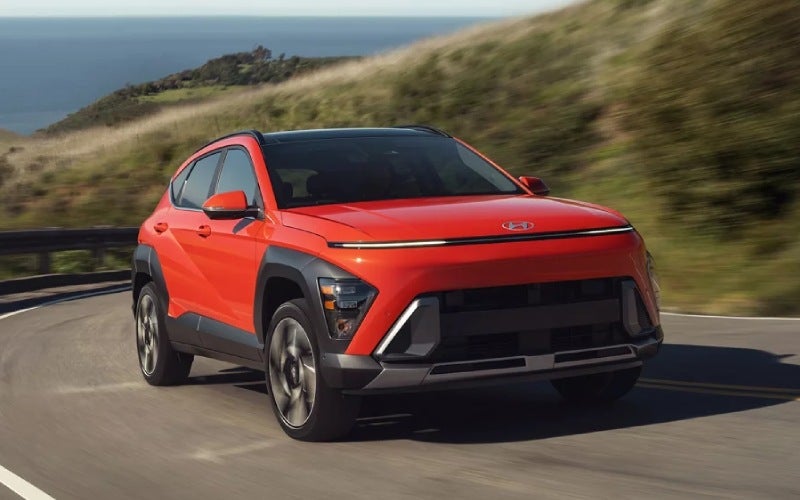
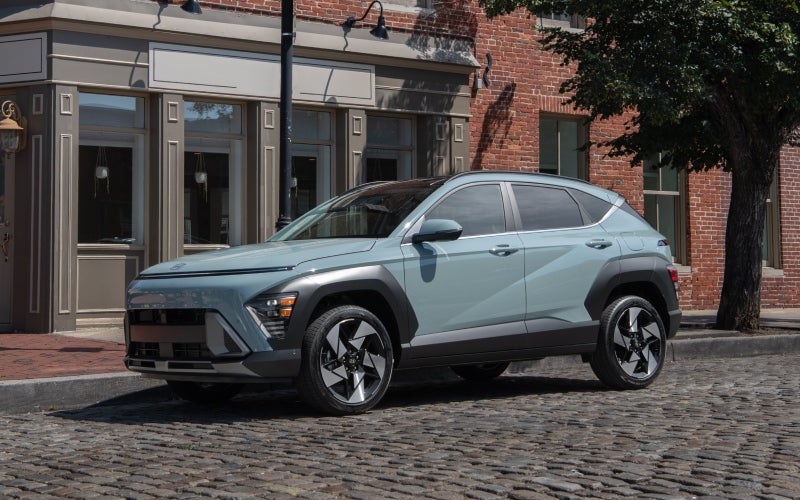
The 2027 Hyundai KONA fits the needs of many Terre Haute, IN commuters because it combines a compact footprint with real SUV versatility, modern connectivity, and reassuring safety technology. For drivers who split time between city streets, campus-area traffic, Wabash Valley routes, and highway stretches, the KONA offers the kind of everyday balance that makes ownership feel simple. It is small enough to park easily, roomy enough for passengers and gear, and available with drivetrain options that can add confidence when the road surface changes.
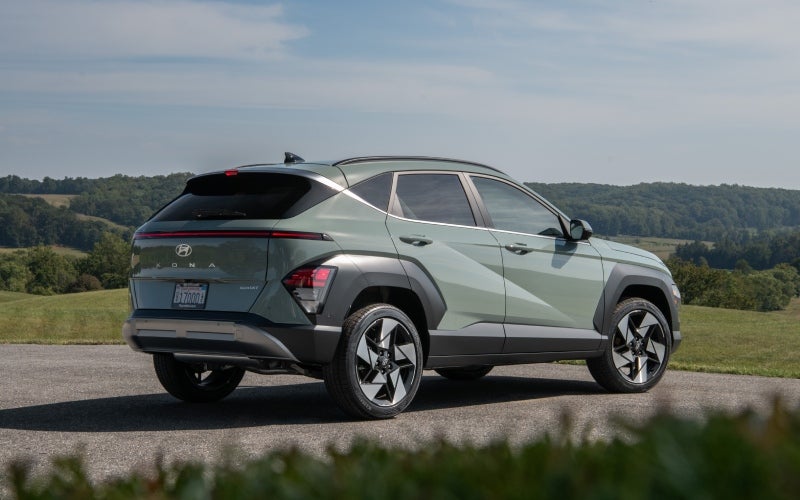
What makes the KONA especially appealing is how many useful features are built around daily routines. Hyundai lists seating for five, 25.5 cubic feet of cargo capacity with the rear seats up, and 63.7 cubic feet with the rear seats folded down. That means it can handle work bags, groceries, athletic gear, weekend luggage, or larger items when you fold the 60/40 Split flat rear seatback. Its 104.7-inch wheelbase and 171.3-inch overall length also help it feel stable on the road without becoming difficult to maneuver in tighter parking areas.
Why size matters for Terre Haute daily driving
A small SUV should be easy to live with, and the KONA’s size is one of its biggest advantages. Around Terre Haute, drivers often move between local businesses, Indiana State University activity, residential neighborhoods, and nearby highways. A vehicle that feels comfortable in stop-and-go traffic but still relaxed on open roads can make a big difference. The KONA’s 34.8-foot turning diameter helps with U-turns, parking lots, and tight driveways, while its elevated seating position provides a more confident view than many compact cars.
Inside, the KONA makes strong use of its footprint. Front legroom measures 41.7 inches, rear legroom measures 38.2 inches, and passenger volume is listed at 101.2 cubic feet without the sunroof. That gives the KONA enough interior space to accommodate passengers without feeling oversized. For commuters who occasionally carry coworkers, friends, children, or relatives, the second row is practical rather than merely symbolic.
Which 2027 Hyundai KONA powertrain is best for commuters?
The right powertrain depends on driving style. SE and SEL Sport models use a 2.0L MPI Atkinson DOHC 16-valve Inline 4-cylinder engine rated at 147 horsepower and 132 lb.-ft. of torque. This engine is paired with an Intelligent Variable Transmission and includes Shift-by-Cable w/ SHIFTRONIC® manual shift mode. It is a smooth, approachable setup for shoppers who prioritize easy everyday driving and a calm commute.
SEL Premium and Limited models use the 1.6L Turbo-GDI DOHC 16-valve Inline 4-cylinder engine, rated at 190 horsepower and 195 lb.-ft. of torque. This engine is paired with an 8-speed Automatic Torque Converter transmission, Shift-by-wire, and Paddle Shifters. Commuters who regularly merge onto highways, pass slower traffic, or prefer a more responsive feel may appreciate the turbocharged engine’s stronger torque delivery. Both engines use Regular Unleaded fuel, keeping the ownership experience straightforward.
When comparing the two, consider how the vehicle will be used most often:
- 2.0L MPI engine: A strong match for predictable commuting, errands, and drivers who prefer smooth simplicity.
- 1.6L Turbo-GDI engine: A better fit for shoppers who want more responsive acceleration and a livelier driving character.
- FWD: A practical choice for many drivers who stay mainly on paved city and highway routes.
- AWD, Active On-Demand: A smart option for drivers who want added traction confidence and Snow mode.
How available AWD helps beyond rough weather
Available AWD, Active On-Demand, is often discussed only in terms of winter driving, but it can matter in more everyday situations as well. Around the Wabash Valley, commuters may encounter uneven pavement, rural routes, wet roads, gravel driveways, construction areas, or steep entrances. AWD models add Normal, Sport, and Snow drive modes, while FWD models include Normal and Sport. The added Snow mode gives drivers another setting for low-traction conditions, but the system’s value extends to broader confidence on changing surfaces.
AWD models also gain additional ground clearance. Hyundai lists FWD ground clearance at 6.7 inches with 17-inch wheels and 6.9 inches with 18-inch and 19-inch wheels. AWD models provide 8.1 inches with 17-inch and 18-inch wheels and 8.3 inches with 19-inch wheels. That difference can be useful when entering uneven lots, navigating gravel, or dealing with road imperfections. AWD models also use a Multi-link rear suspension rather than the FWD Coupled Torsion Beam Axle, which may appeal to drivers who prioritize composure over varied surfaces.
Technology that makes the commute easier
Every 2027 Hyundai KONA includes a 12.3-Inch Touchscreen Audio system with ccNC Lite, AM/FM/SiriusXM®/HD Radio® System, 6 speakers, and 1920 x 720 resolution. For commuters, that large standard display is a major convenience because phone integration, audio controls, and vehicle information are easier to see and use. Wireless Android Auto and Apple CarPlay Compatibility are standard across the lineup, reducing cord clutter and making it simple to access music, maps, calls, and messages.
Hyundai also includes front dual 3-amp USB-C outlets, with one Power/Data and one Power outlet, plus rear dual 3-amp USB-C outlets for passengers. Wireless Device Charging for supported devices is included on SEL Sport, SEL Premium, and Limited. Add in Bluelink® Connected Car System and OTA Software Updates, and the KONA feels designed for drivers who rely on connected technology every day. Limited models go even further with a 12.3-inch Digital Instrument Cluster, Bose premium audio with external amp and 8 speakers, Surround View Monitor, Remote Smart Parking Assist, and Ambient Lighting with user-selectable color.
Safety support for busy local routes
Commuting often involves repetition, but that does not mean every drive is predictable. The KONA includes an extensive list of driver-assist technologies designed to support awareness. Standard features include Forward Collision-Avoidance Assist w/ Pedestrian/Cyclist/JT/DO Detection, Lane Keeping Assist, Lane Following Assist, Blind-Spot Collision Avoidance Warning, Rear Cross-Traffic Collision Avoidance Assist, Intelligent Speed Limit Assist, Driver Attention Warning, High Beam Assist, Safe Exit Warning, and Rear Occupant Alert.
These systems are helpful in different ways. Rear Cross-Traffic Collision Avoidance Assist can support backing out of crowded parking spaces. Blind-Spot Collision Avoidance Warning helps during lane changes. Lane Keeping Assist and Lane Following Assist can support steadier highway travel. Forward Collision-Avoidance Assist is useful in traffic where vehicles, cyclists, or pedestrians may appear unexpectedly. Limited models add Parking Distance Warning - Forward/Side/Reverse with Contour Warning, a useful feature for tight urban parking.
Shoppers comparing trims should think about which features will matter most during the week:
- Parking support: Rear View Monitor with parking guidance is standard, while Limited adds Surround View Monitor and Parking Distance Warning - Forward/Side/Reverse.
- Highway support: Lane Following Assist, Lane Keeping Assist, and Smart Cruise Control w/Stop & Go on SE, SEL Sport, and SEL Premium help make longer drives feel more manageable.
- Awareness features: Blind-Spot Collision Avoidance Warning and Rear Cross-Traffic Collision Avoidance Assist are standard across trims.
- Family-focused reminders: Rear Occupant Alert and Safe Exit Warning add helpful everyday reassurance.
Frequently Asked Questions:
Is the 2027 Hyundai KONA comfortable enough for a daily commute?
Yes. The KONA offers a roomy cabin for its class, with 41.7 inches of front legroom and 38.2 inches of rear legroom. Available comfort features such as heated front seats, ventilated front seats on Limited, H-Tex® Trimmed Seats on SEL Premium and Limited, and a leather-wrapped steering wheel on upper trims help make daily driving more pleasant.
Should Terre Haute commuters choose FWD or AWD?
FWD works well for many paved-road commuters, especially drivers who value simplicity. Available AWD, Active On-Demand, is worth considering for drivers who regularly travel rural roads, gravel surfaces, uneven driveways, or want added traction confidence. AWD also adds Snow mode and increased ground clearance.
Does the 2027 Hyundai KONA have enough cargo space for everyday errands?
Yes. The KONA provides 25.5 cubic feet of cargo capacity behind the rear seats and 63.7 cubic feet with the rear seats folded down. The standard dual-level cargo floor adds flexibility for different item sizes.
Which trim is best for technology-focused commuters?
All trims include the 12.3-Inch Touchscreen Audio system, wireless Android Auto and Apple CarPlay Compatibility, Bluelink® Connected Car System, and OTA Software Updates. Shoppers who want the most advanced equipment should look closely at Limited, which adds Surround View Monitor, Remote Smart Parking Assist, Bose premium audio, a 12.3-inch Digital Instrument Cluster, and additional convenience upgrades.
The 2027 Hyundai KONA is a strong commuter SUV because it gives drivers useful choices without overcomplicating the shopping process. The 2.0L MPI engine is well suited to smooth everyday travel, while the 1.6L Turbo-GDI engine gives the KONA a more energetic personality. Available AWD adds confidence and capability, and the technology package feels current even before moving into the highest trim.
For Terre Haute, IN drivers who want something compact, practical, and well-equipped, the KONA deserves a test drive. It has the cargo room to support real-life errands, the safety features to help with heavy traffic, and the connected cabin technology to make daily routes feel more streamlined. The best way to decide is to compare trims, sit in both rows, test the cargo area, and drive the powertrain that best matches your routine.